01 · Discover
Detect regressions after website changes
Run recurring WCAG 2.2 checks and keep new findings connected to the page, release context and earlier issue history.
Continuous Accessibility Monitoring
Pluro connects recurring scanning, issue history, ownership, remediation and verification so accessibility regressions can be found, assigned and resolved as websites continue to change.
14-day free trial — no credit card required.
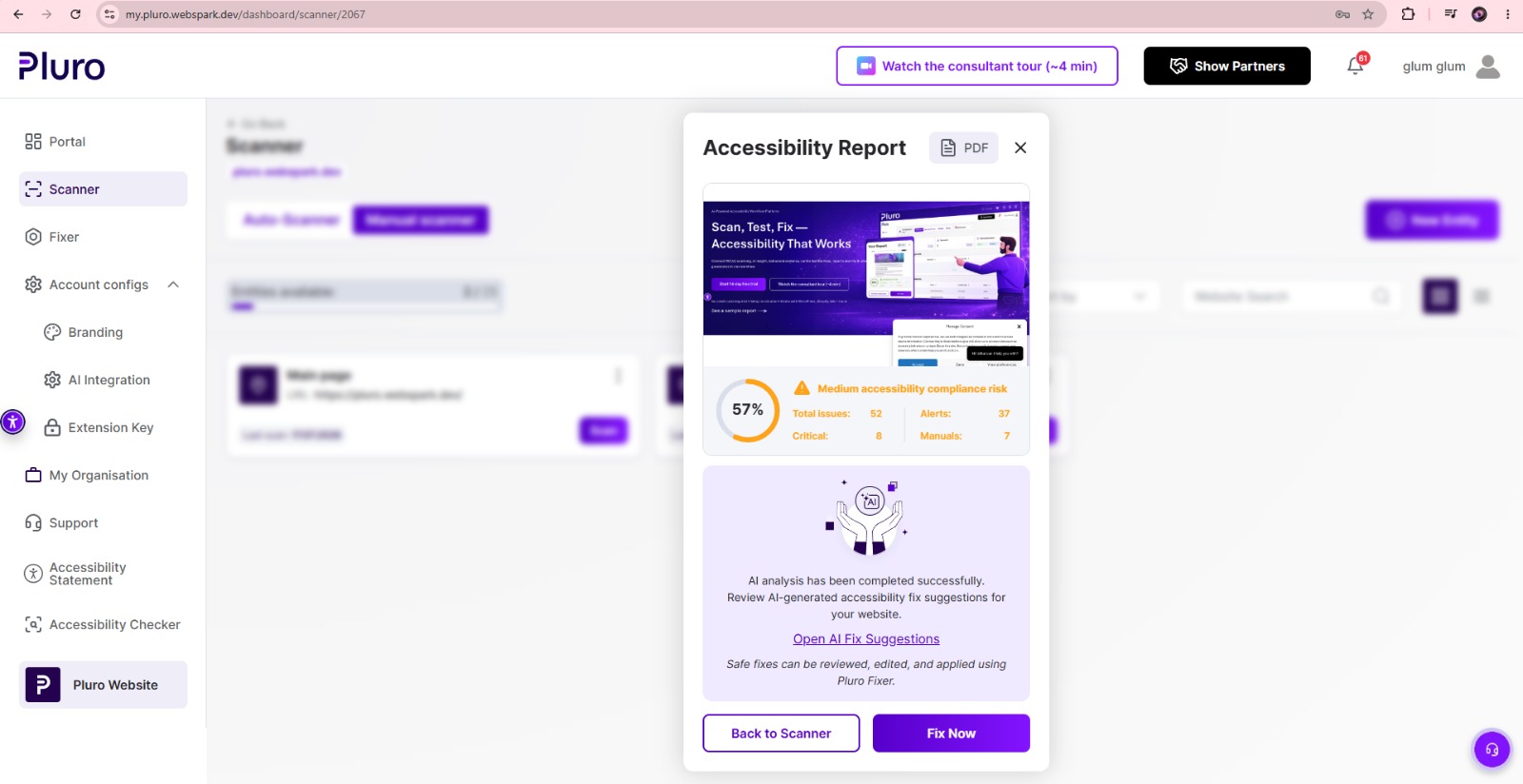
From change to verified outcome
Pluro turns recurring scan results and new regressions into an operational workflow with clear history, ownership, remediation paths, evidence and verification.
01 · Discover
Run recurring WCAG 2.2 checks and keep new findings connected to the page, release context and earlier issue history.
02 · Understand
Review whether the issue is new, repeated or reopened, then assess standards context, user impact and supporting evidence.
03 · Assign
Send regressions to developers, content teams, QA, accessibility experts or managed remediation workflows with the relevant history attached.
04 · Remediate
Use source-code fixes, developer guidance, controlled remediation, content updates or expert-led correction based on the issue type.
05 · Verify
Repeat the relevant test, preserve the result and confirm the barrier was resolved rather than closing the issue by assumption.
06 · Govern
Continue recurring scans, issue history, ownership, evidence and reporting across websites and teams. Complex portfolio governance may require a Custom Plan.
Behavior Evidence
Record real user journeys and compare focus, keyboard movement, forms, modals, validation, notifications and dynamic updates after releases.
Capture regressions automated scans cannot reproduce
Preserve timelines, screenshots and issue history
Connect evidence directly to the reopened or new finding
Monitoring with human review
Pluro combines recurring scan results with manual review, keeps recommendations visible and routes complex regressions to developers or accessibility experts.
Recurring findings: new and repeated technical issues enter a reviewable workflow.
Needs Review: regressions requiring context remain subject to human approval.
Manual validation: complex behavior and usability regressions stay with QA, developers or accessibility experts.
One monitoring record, shared responsibility
The monitoring record remains connected while each role sees the issue history, ownership and next action relevant to its work.
Product & Engineering
Use recurring findings, the Chrome Extension, VS Code guidance and Behavior Evidence across development, QA and release workflows.
Accessibility Experts
Review new and repeated findings, capture reproducible evidence and retain control over remediation decisions.
Enterprise & Partners
Manage websites, ownership, issue history, recurring monitoring and reporting through one connected platform. Complex portfolio capabilities are scoped separately.
Move from monitoring to outcomes
Start with one website or connect continuous accessibility monitoring across multiple teams and digital properties.
Start with one website and connect recurring scans, issue history, remediation, verification and reporting in one workflow.
